Secret History: From Roman Roads to Napoleon
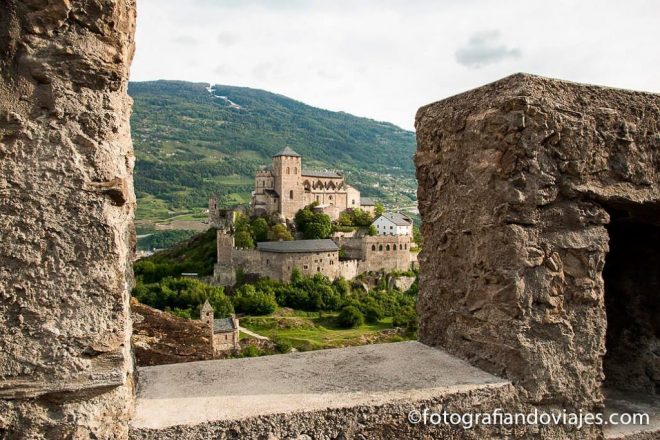
Valais was not always a quiet Swiss region. Its strategic location in the middle of the Alps made it one of the most desired and dangerous passageways in Europe for centuries.
- The Roman Toll Road: In the year 57 BC, Julius Caesar’s Roman legions invaded the area. Why? They wanted to control the Great St. Bernard Pass, a vital mountain road connecting Rome to northern Europe.
- The Bishops with Swords: In the year 999, the King of Burgundy gave the entire region to the Bishop of Sion. For over 800 years, these religious leaders ruled like kings, collected taxes, and led armies to defend the valley.
- Napoleon’s Imperial Highway: In 1802, the famous French leader Napoleon Bonaparte took control of Valais. He needed the Simplon Pass to move his army quickly into Italy.
- Joining Switzerland (1815): After Napoleon lost power, the people of Valais wanted protection from future invasions. On August 4, 1815, Valais officially joined the Swiss Confederation, becoming one of its last members.
Stone Cities and Wooden Villages: A Reflection of Nature
The towns in Valais are very different depending on their altitude. They show us how geography changes the way people live.
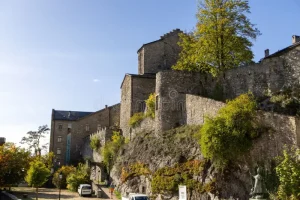 Sion: The Medieval Jewel
Located on the flat valley floor, it is the oldest city in Switzerland (over 7,000 years of history). Its top attraction is the Valère Basilica, which holds the oldest playable organ in the world, built in 1430!- Zermatt: The Eco-Friendly Wooden Village
Located at the base of the Matterhorn, this town is a lesson in sustainability. Traditional houses are made of dark wood and stand on wooden pillars with a flat stone disc on top. This clever design stopped mice from climbing up to eat the farmers’ grain. Also, normal cars are banned here to keep the air clean. 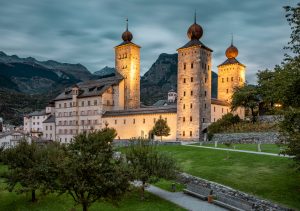
Brig: The Gateway to Trade
In the German-speaking area, this town grew rich from trade. Its treasure is the Stockalper Palace, built in the 17th century by a wealthy merchant who controlled the salt trade over the mountains.