The “Alpine Lab” Where Geography Becomes Fascinating
Imagine a place where you can touch an ancient glacier in the morning, walk through a medieval castle at noon, and eat melted cheese at night in a town with no gas cars. This place is real. Its name is Valais (pronounced Va-lay), and it is the most extreme, bilingual, and surprising region in southwest Switzerland.
For students of science, history, and geography, Valais is not just a holiday destination. It is a real, 3D textbook. Let’s find out why!
1 Extreme Geography: Shaped by Ice and Giants
Valais is the “roof” of Switzerland. Its landscape was created over millions of years by tectonic movements and the colossal power of ice.
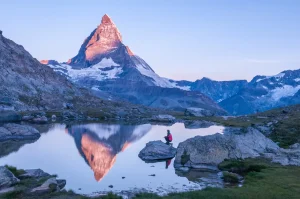
- The King of Geometry: The Matterhorn is not just a beautiful mountain. It is the perfect example of a horn—a pyramid peak shaped naturally by multiple glaciers crashing into each other.
- The Planet’s Thermometer: The Aletsch Glacier is a giant river of ice as long as 230 football fields. Today, scientists from all over the world study it closely because its melting speed is clear evidence of global climate change.
2 The Mystery of the Invisible Border
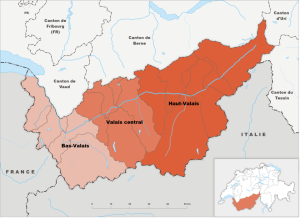
Can you imagine crossing a street and hearing a different language? In Valais, this happens! The region is divided by an invisible cultural border:
- If you travel to the West (Lower Valais), people say “Bonjour” (French).
- If you travel to the East (Upper Valais), people say “Guten Tag” (German).
In the middle of this cultural mix sits Sion, the capital city. Crowned by two castles that look like they belong in a fantasy movie, this city shows how humans used rocky hills for defense since the Roman era.